
How I Balance School, a Side Hustle, and Content Without Burning Out
Hey, it's Ivan again. Last time, I answered some of the most common questions I get, and one of them was, "Okay, but how do you actually manage to do it all?" Here's the detailed answer. Spoiler alert: I'm no superhero. I just managed to build a simple system. It's not perfect, but it works.
How the Chaos Started
For the first few weeks, I did everything whenever I felt like it. I'd either spend three hours straight on a video or not touch a thing for five days. Plus, with final exams and midterms on the horizon, things got messy. At one point, I realized I was sleep-deprived, my video was unfinished, and I wasn't prepared for class. Three fails at once. Great result.
That's when I realized a simple truth: content, just like studying, values consistency over heroism. It's better to spend 30 minutes every day than to pull one marathon session on the weekend that leaves you not wanting to even look at your editing software for a week.
My Low-Stress Weekly Plan
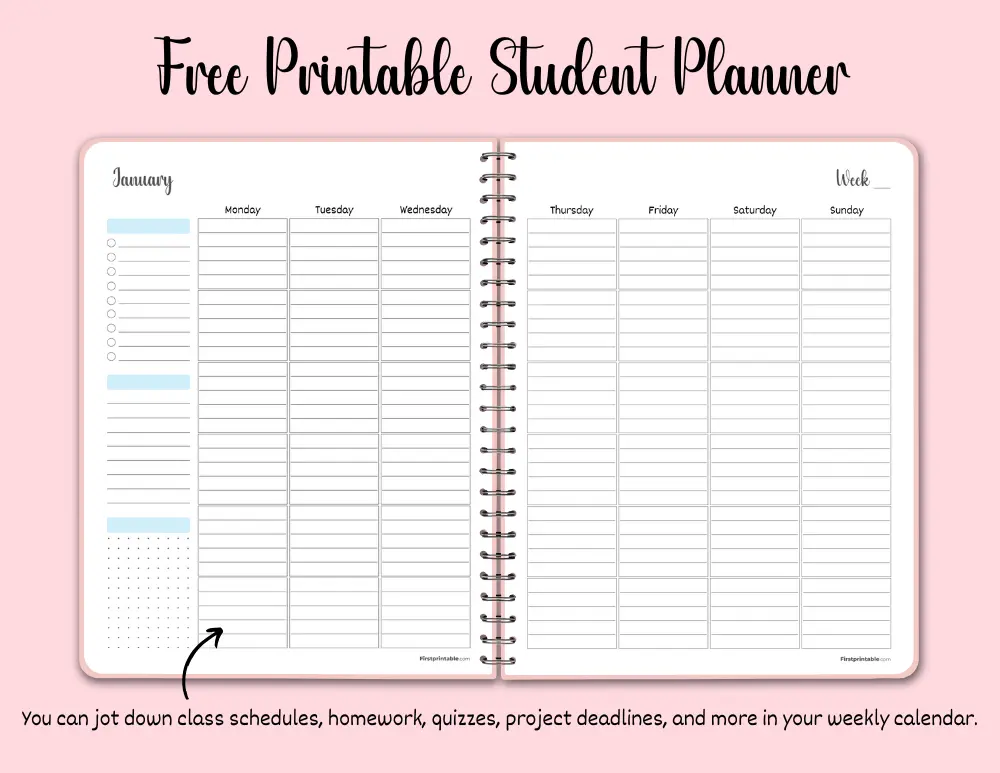
Nothing complicated—just a regular paper planner and three rules:
Gaps between classes = short tasks. Brainstorming an idea, drafting a script in my notes, picking out music. Anything that can be done on my phone in 15–20 minutes.
Evenings = editing. This is where everything I wrote about in my first article comes in handy. I put together quick videos in CapCut, and if I want to do something more serious, I open up DaVinci Resolve.
One day a week = complete rest. No content, no ideas, no "I should probably check the analytics." I've tested this myself: without a day off, after two weeks you start to hate the very thing you loved yesterday.
Three Mistakes I Made (So You Don't Have To)
Trying to make everything perfect. One video could take me two evenings because of tiny details the viewer wouldn't even notice. Now I set a timer: done and published is better than perfect and sitting in your drafts.
Skipping sleep. It feels like "ideas flow better" at night. In reality, I was just less sharp in my morning classes. It's not worth it.
Comparing my first steps to someone else's results. You see someone's success story and think you're doing something wrong. But that person might have a year of practice behind them that they're not talking about.
A Few Life Hacks That Actually Helped:
An idea bank in my notes. If a thought pops into my head on the subway or in the cafeteria line, I write it down immediately. Later, when you're sitting there with no inspiration, you open the list and find five options ready to go.
Video templates. The same subtitle style, the same structure: a catchy hook, the main point, a short conclusion. No need to reinvent the wheel every time.
Batch working. I'll shoot several videos at once, then edit them all in one evening. Switching between different types of tasks is more costly than doing similar ones in a row.
Pausing notifications. When I'm editing, I turn my phone face down. It's basic, but it saves me an hour.
What I've Learned About Balance
The main takeaway for me is this: it shouldn't feel like a second job, or it will eventually fall apart. If you have exams, put everything else aside and study. The platform isn't going anywhere, but you can't roll back your grades or your health. During exam season, I personally scale back to a minimum, and that's okay.
And one more thing. I'm not going to tell you how many hours you "should" dedicate to this, because there's no magic number. For some, an hour a day is enough; for others, it's a couple of hours on the weekend. It's more important to figure out how much free time you actually have, rather than trying to copy the schedule of someone who isn't also a student.
What About You?
So how do you balance your studies with your own thing—be it a job, a creative hobby, or a project? Do you have a system, or do you just go with the flow? Let me know; I'm curious to compare approaches. In the next article, I'll wrap up my first few months and talk about who this path probably isn't for.