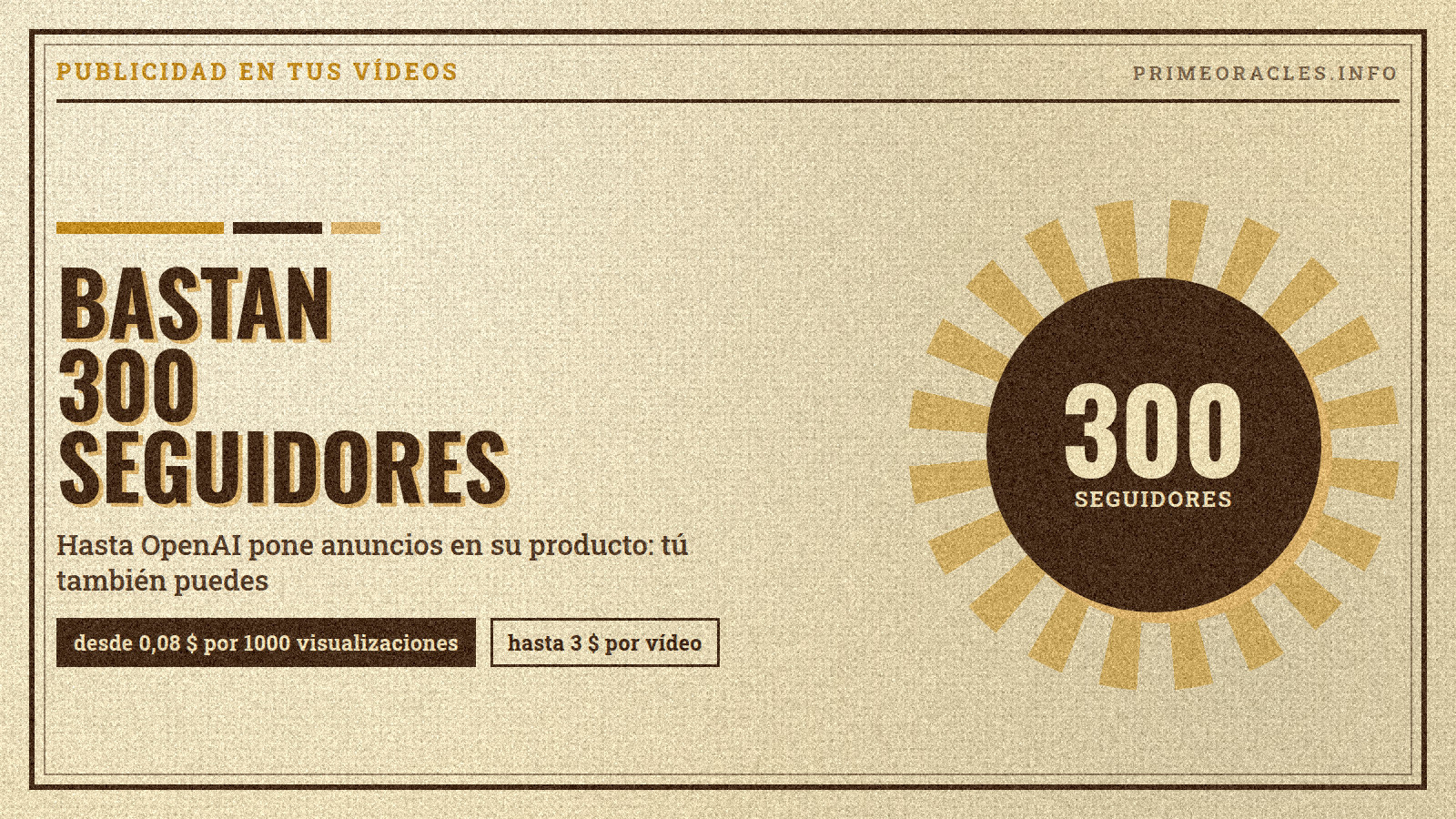
On October 5, 2026, OpenAI introduced a new ad format: an ad appears right as ChatGPT generates an image from a user's prompt. ChatGPT reaches 1.2 billion people weekly, and even at that scale, the company is comfortably placing ads on its own product. If it's normal for the world's most valuable AI company, it's normal for you, too—even with an account of 300 followers.
This article isn't about how to buy ads within ChatGPT. It's about the takeaway from the news: ad space exists for anyone with an audience. Size is a matter of price, not permission.
What OpenAI Did: The Quick Breakdown
Before, ads in ChatGPT were a card displayed below the finished response—for example, a food delivery service under a recipe. Now, a visual format has been added: while the model generates an image, a brand's ad is shown alongside it.
| Detail | Current Status |
|---|---|
| Announcement | October 5, 2026 |
| Where the new format works | Testing since October, only in the US and with a limited group of advertisers |
| ChatGPT Ads in General | Over 60 countries; Russia, Belarus, and Kazakhstan are not on the lists |
| Ad-supported plans | Free and Go. Plus, Pro, Business, Enterprise, and Edu plans are ad-free |
| Who sees them | Only logged-in adult users |
| ChatGPT's weekly audience | 1.2 billion people (OpenAI data) |
OpenAI makes three promises about the format: the ad is labeled, it's kept separate and not baked into the generated image, and it doesn't influence the model's responses. That last part can't be independently verified yet—it's a claim from the platform itself.
Alongside the new format, OpenAI expanded its measurement capabilities: there are now 22 analytics partners, Negative Phrases for "qualified" advertisers, a configurable attribution window, and a conversion data quality score. In simple terms, brands can now see which purchases came from the chat.
How Fast It's Grown
Here, the speed is more important than the news itself.
| When | What Happened |
|---|---|
| February 9, 2026 | ChatGPT ads launch with a $60 CPM |
| April 2026 | CPM drops to around $25 |
| May 5, 2026 | Self-serve ad dashboard opens |
| August 31, 2026 | Annualized revenue run rate hits $1 billion, in under 200 days |
| October 5, 2026 | Visual format and 22 analytics partners |
Eight months ago, there were no ads in ChatGPT at all. Today, it's a channel with a billion-dollar annual run rate. A product that people use daily starts selling space within itself—that's how all platforms work, from television to a neural network chatbot.
Why This Is About You, Not Just OpenAI
The phrase that holds back a new creator the most sounds like this: "It's too soon for me. I only have 200 or 300 followers. Who's going to pay me?" Read this news as the answer.
- No one waits for the perfect moment. OpenAI put ads on a product that isn't yet comfortably profitable and that people use for free every day. The platform didn't wait until it felt "big enough."
- Ads don't ruin the product if they're honestly labeled. That's what OpenAI's whole announcement is about: a label, a separate space, no touching the response. The same principle works for your account: viewers aren't bothered by ads; they're bothered by deception.
- In short-form video, followers aren't the main metric. Reach on TikTok, Shorts, and Reels comes from recommendations, not your subscriber base. A video from an account with 300 followers can get 2,000 views or 200,000. Brands pay for views, not the number on your profile.
What Brands Really Care About
This is the key. Throughout 2026, the logic of major advertisers has shifted from "I'll buy a post from a big creator" to "I'll pay for a measurable result." OpenAI's announcement is all about this: those 22 analytics partners are there to count purchases, not just impressions.
For a small account, this is great news. When you're paid for results, you don't have to pass an audience size filter: you post the video, and the payment is calculated based on the views it got.
The order of magnitude by format, with figures from briefs we've covered on the hub (as of their publication dates):
| Format | What You Do | Pay Rate (approx.) |
|---|---|---|
| Banner over your own video | You film your usual content and add the client's banner on top | from $0.08 per 1000 views |
| Clips from shows and streams | You cut authorized footage into vertical clips | around $0.20 per 1000 views |
| Pre-made video on your account | You post a video they send you | $0.70–$1 per 1000 views |
| Your own UGC based on a brief | You film it yourself following the brand's brief | $2–$3 per 1000 views |
Let's do the honest math, no sugarcoating. An account with 300 followers, five videos a week, and an average of 3,000 views per video gets 15,000 views. With a banner, that's about $1.20 a week; with your own UGC, it's about $30–$45. It's not a salary. But it's your first money, your first numbers for a portfolio, and a clear idea of which format works for you. One lucky video with 200,000 views changes the math instantly.
Five Steps for a Small Account
- Count views, not followers. Take your last 10 videos and find the average view count. That's your working number for the client—it's what they'll multiply by the rate.
- Choose a format where size doesn't matter. Banners over your video, pre-made videos to post, clipping, and UGC from a brief all pay per view, not by channel size. What is UGC and how to get into it with no experience: UGC Creator: What It Is, How Much You Can Earn, and How to Start from Scratch.
- Take your first brief with pay-per-view. Start with the banner format: the video topic is open, you don't have to shoot anything new for the brand, and you just need to place the banner in your edit. An example of such a brief: New Banner Brief: $0.08 per 1000 Views with Open Topic.
- Label your ads. Do what OpenAI does: label it. In the video, use the paid partnership toggle or a line in the description. In Russia, internet advertising also has specific labeling requirements: the "advertising" tag, advertiser details, and registration of the creative through an advertising data operator. Usually, the client or the platform handles this—ask who's responsible for it in your brief.
- Measure and show your results. Screenshot your views, click counts, a promo code, or a UTM tag. A client used to purchase attribution will ask, "How many conversions did we get?" not "How many followers do you have?" The one with the numbers ready gets the next brief. If your platform doesn't have official monetization, pay-per-view options are gathered here: How to Make Money in Russia on TikTok, Shorts, and Reels in 2026 Without Monetization.
What This Means for Brands
The AI chat channel is no longer experimental: there's a dashboard, analytics, and attribution. There's no direct access from the CIS, but the "pay for results" logic is available now through briefs for creators with pay-per-view models. And yes, creators with small accounts work well with this logic: you pay for views, not for the size of their profile.
What's Still Unknown
A few things OpenAI didn't explain:
- The advertisers participating in the test haven't been named.
- It's not stated how many ads a person will see per image generation.
- There's no specific pricing for the visual format, only the general CPM history.
- It hasn't been announced if or when the format will expand beyond the US.
- There's no independent verification of the main promise: that ads don't influence the model's responses.
The official announcement page on openai.com was inaccessible from our location while preparing this article, so all figures have been cross-referenced with three sources: Search Engine Land, ppc.land, and unite.ai. If OpenAI clarifies the details, we will update this piece.
FAQ
Can you make money from ads with 300 followers?
Yes, when the payment is for views and not for the post itself. In banner, pre-made video, clipping, and UGC from a brief formats, audience size isn't a filter: what counts are the views that specific video achieved.
How many followers do you need to accept brand deals?
For pay-per-view, formally none. Direct "pay-per-post" deals do have a threshold because the brand is buying your name recognition. That's why it's easier to start with pay-per-view.
How much do brands pay per 1000 views?
In the briefs we've covered, the range is from about $0.08 for a banner over your own video to $2–$3 for a custom video filmed according to a brand's brief. The specific rate depends on the brief, the topic, and your audience's country.
Do you have to label ads in your own videos?
Yes. Platforms have a paid partnership toggle, and in Russia, internet advertising has separate labeling rules: an "advertising" tag, advertiser details, and registration of the creative through an advertising data operator. Ask the client who is handling the paperwork.
Will ChatGPT ads come to Russia?
Russia does not appear on the published lists of countries where ChatGPT advertising is available. You cannot buy ads directly from Russia.
On Prime Oracles, brands post briefs, creators take them on, and get paid for views—account size doesn't affect access to briefs. Open briefs are in the Content Rewards section and can be accepted with the Accept Task button; brands can post their own brief at primeoracles.com.