
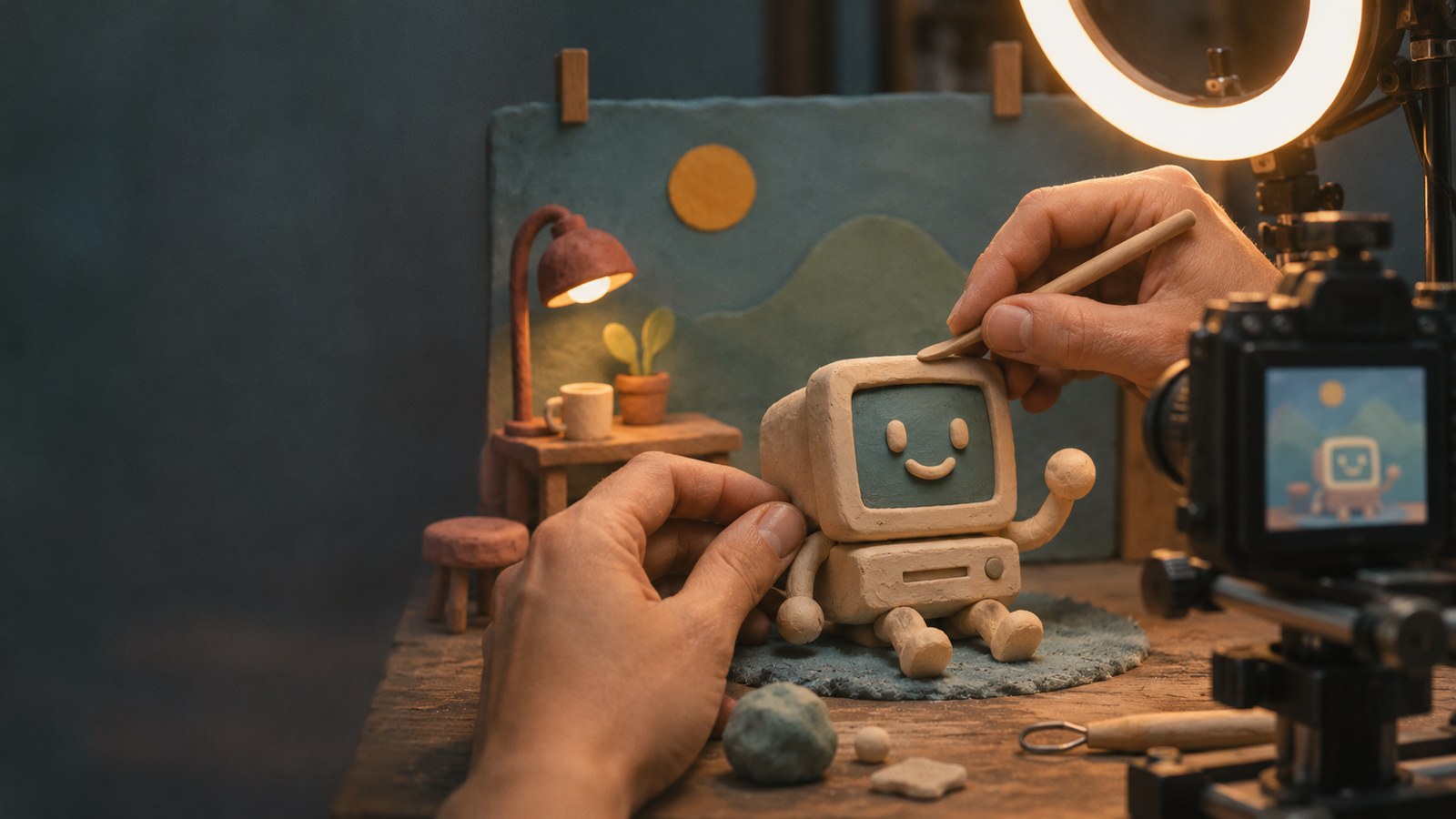
Brands are paying a premium for video you can tell a human made. Apple's Mac mini spot was animated frame by frame in clay, and the behind-the-scenes clip Apple posted to prove no AI was involved passed 188 million views on Instagram in two days, against about 16 million for the ad itself on YouTube, according to Fast Company. That gap is the whole opportunity for a creator: on Prime Oracles, brands pay UGC creators per view instead of per video, and the English-language UGC tasks run from $0.40 to $3.30 per 1,000 verified views as of 9 November 2026.
Key takeaways
- The Wall Street Journal reported on 3 November 2026 that studios doing handmade commercials are booked out, as brands look for an antidote to AI-generated advertising.
- Apple's "Mighty Mac mini" ad (25 August 2026, TBWA\Media Arts Lab, director Nicos Livesey) was hand-animated in clay. The making-of Reel out-travelled the ad.
- Levi's shot its 60-second holiday film "Let's Get Fuzzy" in stop motion at roughly four hours of work for every second on screen, per Marketing Dive.
- Gartner research cited in the same report: half of consumers prefer brands that do not use generative AI. Pew Research Center found 40% of US adults expect AI to have a negative effect on society over the next 20 years.
- You do not need a clay studio to use this. Filming with your own hands, face and props is the cheapest way to look like the thing brands are now paying for.
What did the brands actually do?
Four campaigns, no AI generation in the picture. Apple turned the new Mac mini into a clay bodybuilder, a race car and a rocket, and then published a separate video of the sketches, props, armatures and sets behind it. Levi's built a yeti in a red sweater and shot him a frame at a time. Prada mixed live action with hand-drawn animation for its holiday film. e.l.f. Beauty put real makeup on puppets, shot by Apartment D Films, the studio the WSJ says has seen inbound requests double in two years.
The common thread is not nostalgia. It is proof of effort: a viewer can see how long it took, and that is exactly what an AI render cannot show.
Why "no AI" became a selling point in 2026
Audiences got tired faster than the tools got better. Half of consumers say they prefer brands that avoid generative AI, per Gartner research cited by Marketing Dive, and 40% of American adults told Pew they expect AI to harm society over the next two decades. A brand that spends four hours per second of footage is buying a signal — this was made by people — and signals like that are now cheaper to buy from creators than from animation studios.
How much does a hand-shot video pay per view?
Brands on Prime Oracles do not pay for the production value; they pay for verified views, at the rate printed on the task card. Here is what the current English-language UGC rates work out to:
| Rate per 1,000 verified views | 100 000 views | 500 000 views |
|---|---|---|
| $0.40 | $40 | $200 |
| $2.00 | $200 | $1,000 |
| $3.30 | $330 | $1,650 |
Each task also carries its own minimum and maximum payout — the $3.30 task caps at $300 per creator, the $2 Prime Oracles task at $200 — so check both numbers on the card before you plan a shoot. Take a UGC task on Prime Oracles under Content Rewards; there is no follower threshold to clear first.
What should you film if you cannot build a clay set?
Copy the mechanic, not the medium. Show your hands doing the thing. Shoot practical: paper, props, a desk lamp, one take. Post the process as its own video — Apple's making-of clip pulled 188 million views on Instagram while the finished ad did about 16 million on YouTube, and a process cut costs you nothing extra once you already have the footage.
And read the brief before you decide AI is the enemy: some task cards want exactly the opposite. One live task pays $2 per 1,000 views to film how you make clips with an AI tool. The rule is the card, not the trend.
If you are a brand, what changes?
You no longer have to choose between one expensive handmade film and a stack of AI renders nobody finishes watching. Prime Oracles turns one piece of brand content into hundreds of short videos by independent creators, paid per view, so you can brief for hand-shot, in-camera footage and only pay for verified views of what actually travels. Launch a per-view campaign and set the rate yourself.
FAQ
Are brands moving away from AI-generated video?
Not entirely — but several of the most-watched campaigns of late 2026, from Apple, Levi's, Prada and e.l.f., were made by hand, and the WSJ reports handmade-ad studios are fully booked.
Why did Apple release a behind-the-scenes video?
To prove the ad was not AI. Viewers had assumed it was, and the making-of Reel went on to collect more views on Instagram than the commercial itself did on YouTube.
Can I submit an AI-made video for a paid task?
Depends on the task card. Some tasks are built around showing an AI tool; others ask for footage you shot yourself. The brief decides, and a task that bans AI will say so.
How much do UGC tasks pay per 1,000 views?
On the English-language showcase right now, between $0.40 and $3.30 per 1,000 verified views, each with a minimum and a maximum payout per creator.
Do I need followers or special gear?
No. Payment follows verified views of your video at the card rate, not your follower count, and a phone plus daylight is enough for the hand-made look brands are asking for.
The craft trend is a brief, not a barrier: open the task list, pick a product task and film it with your own hands this week.
Read next: is Prime Oracles legit, and how payouts and verification work and the best clipping platforms in 2026 by rates, fees and payouts.