
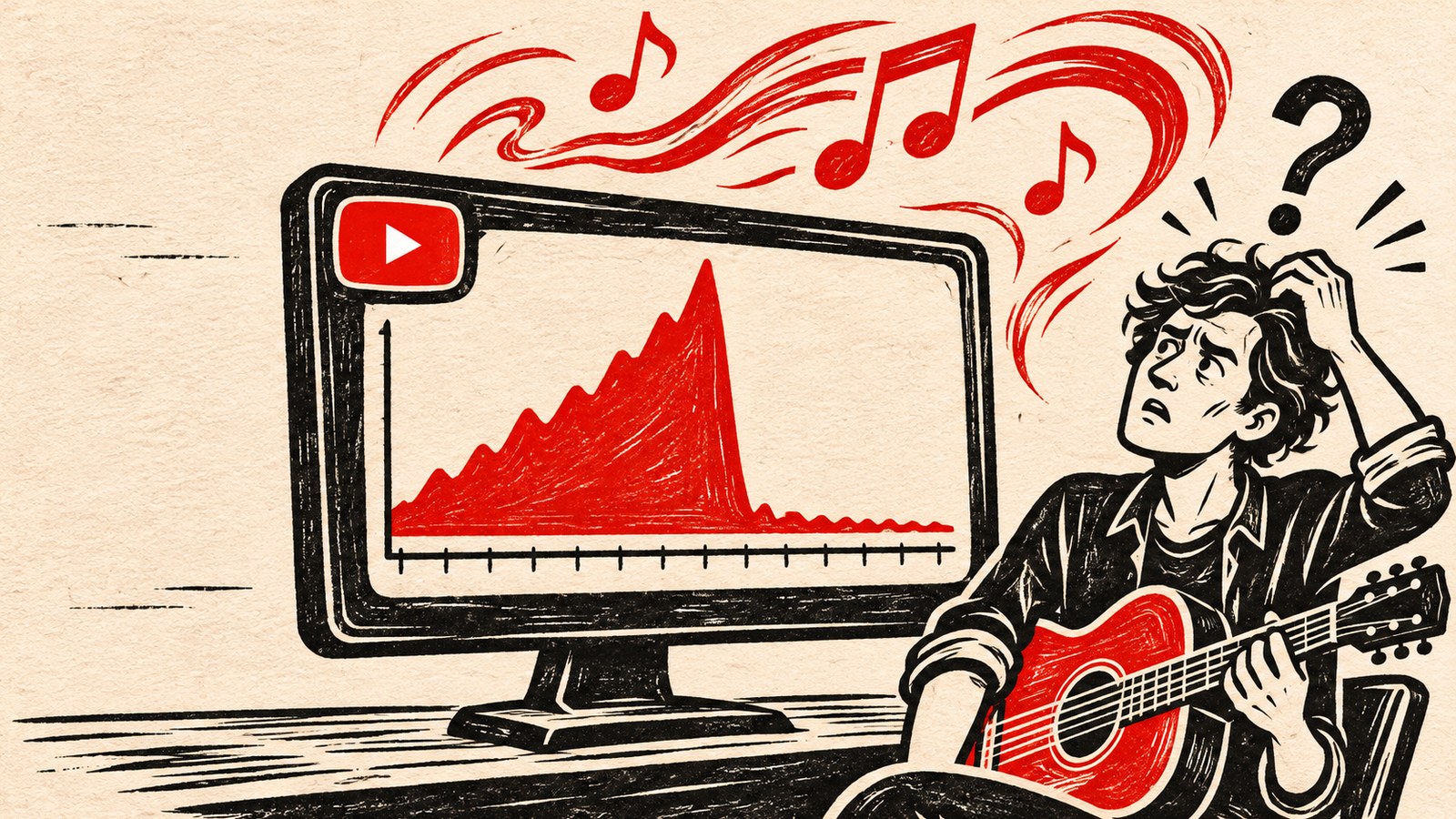
A music video can lose almost nine views out of ten in seven days. LISA's "Tarantino" took 71,702,899 views in its debut week on YouTube's global music video chart and 8,363,753 in the week ending 5 November 2026 — down 88.3%, from No. 1 to No. 90. That is the argument for spreading a release out instead of betting it all on launch day: on Prime Oracles, artists and labels pay creators per view to use a track in short videos.
Key takeaways
- Weekly views fell 88.3% between chart week one and week two, according to ppc.land's reading of YouTube's weekly chart files.
- The song held a place in 14 of 16 national charts in week one and in 3 of 16 in week two.
- Brand support did not stop the slide: a limited-edition PlayStation DualSense controller tied to the video went on sale on 30 October 2026, inside the chart week.
Why do music video views collapse after week one?
A launch packs everything into a few days: premiere, press, playlists, a brand tie-in. Once that window closes, nothing new pushes the song into anyone's feed. "Dai Dai" by Shakira and Burna Boy shows the other shape: it went back to No. 1 with 40,661,971 views, its third run at the top in 22 weeks, because people keep making videos with the sound. Price a sponsorship off a debut week and you pay for an audience that may be 12% of that size seven days later. As ppc.land put it, "this week shows how little a big first week says about the audience that remains in week two."
What would those lost views cost per 1,000?
The gap between the two weeks is 63,339,146 views. At a rate of $0.15 per 1,000 views, that many views would cost about $9,500 on a pay-per-view campaign — paid out only as each thousand is verified.
Music campaigns on the Prime Oracles board on 12 November 2026:
| Campaign | Rate per 1,000 views | Budget paid out | Views delivered |
|---|---|---|---|
| Zak Azoury — MEDUSA, anime and TV edits | $0.10 | $2,213 of $3,000 | 22,136,451 |
| Xamid — PARA LA NOCHE (Slowed), film to the sound | $0.15 | $1,499 of $1,500 | 9,993,333 |
| High Forever (Marlon Hoffstadt Remix), react to the track | $0.40 | $995 of $1,000 | 2,487,525 |
| I AM — Sound Promotion | $0.70 | $1,749 of $1,749 | 2,498,571 |
One line is worth sitting with: the Xamid campaign spent $1,499 and collected 9,993,333 views — more than "Tarantino" managed in its whole second chart week. A short-video campaign does not replace a music video; it means the money cannot be burned on a week that never arrives, and that it still works in week six, because creators keep taking the task while budget is left on it.
If you are a creator, not an artist
Sound tasks are the easiest way in: you film to a track instead of selling a product. There is no follower threshold — you take a music task on the rewards board, post your video and get paid for every 1,000 verified views. The campaigns above pay out from $1, with a per-creator ceiling between $75 and $200. There are 49,009 creators on the platform, who together have earned $48,842 on 365.3 M views.
FAQ
Why did "Tarantino" drop so far in one week?
Its debut week ran on a premiere and a brand launch. Once those stopped, weekly views fell from 71,702,899 to 8,363,753.
Does a brand partnership keep a song charting?
Not on its own. The PlayStation placement and the DualSense release both landed in the week views fell 88.3%.
Is a first-week view count a fair basis for a sponsorship price?
It is the weakest week to price from, because it is the peak. Ask for week two and week four numbers first.
How long does a pay-per-view track campaign run?
Until the budget is spent, so views can still come in months after release.
Plan for week three, not launch day
Set a rate you can afford per 1,000 views, name the version of the sound you want used, and let the budget run past release week. The mechanics are in our guides on how to promote a track in TikTok, Reels and Shorts and how to promote music without a label. Then launch a track promotion on Prime Oracles.