On September 24, 2026, TikTok's new Community Guidelines went into effect. TikTok published them on August 25, and in the days since, social media and blogs have been flooded with takes like: "AI videos will now get you banned," "asking for money on LIVE is forbidden," and "you'll be blocked for posting on other social networks."
We did a line-by-line comparison of the new guidelines against the previous version, using TikTok's official pages. The main takeaway: the most sensational "updates" aren't new at all—these rules haven't changed one bit. The real changes affect other areas: advertising, penalties, related accounts, and ads for financial and medical services. Here’s a breakdown of what's actually different, what's stayed the same, and what creators, clippers, and advertisers need to do now.
In a Nutshell
- The new guidelines were released on August 25, 2026, and are effective as of September 24. The previous version was in effect since September 13, 2025.
- What hasn't changed: Rules on AI content, re-uploading others' videos, artificially inflating engagement, LIVE streams, and off-platform behavior.
- What has changed: Penalties for undisclosed ads, a new strike system with an option to complete training, bans on related accounts, and rules for advertising high-risk financial, medical, and cosmetic services.
- For advertisers: You still need to use the ad disclosure label. Videos without it are no longer automatically ineligible for the For You feed, but TikTok may reduce their reach or apply the label itself.
What's Actually Changed
1. Undisclosed Ads
| Before | From September 24, 2026 | |
|---|---|---|
| Video with an undisclosed ad | Automatically ineligible for the For You feed | No longer automatically ineligible: TikTok may reduce its reach or apply the disclosure label itself |
| Repeat violations | Temporary posting suspension or ban | No change |
The rules on when a disclosure is required haven't changed: you need it if you're promoting your own business or advertising another brand for money, products, or other benefits.
One caveat: TikTok's own rules are contradictory here. The section on advertising mentions reduced reach, but the section on monetization still has the old wording about being excluded from the For You feed. The help center for advertisers describes a 24-hour window: after a notification, you must either add the disclosure or appeal the decision, otherwise the video will be removed from recommendations. The safest bet is to just add the label from the start.
2. Strike System and Training
Before, the penalties were a warning, a restriction, or a ban. Now, TikTok outlines a three-step system—a warning, a temporary feature or account restriction, and a permanent ban—and has added something new: in some cases, you can complete optional training on the rules to regain full access.
Here's what the TikTok Help Center says about violations:
- Account standing—"Good," "At Risk," "Highly at Risk," or "Banned"—is based on violations from the last 90 days.
- Strikes expire after 90 days.
- For some first-time violations, you may be offered in-app training. Completing it can get the restrictions lifted. This doesn't apply to severe violations.
- Deleting the video does not remove the strike.
3. Bans on Related Accounts
When TikTok bans "all accounts" of a violator, it's now explicitly stated that this includes related accounts. Simply put: creating a second account to get around a restriction on your first is a fast track to losing both.
4. Ads for Financial, Medical, and Cosmetic Services
Three new categories have been added to the list of what cannot be sold, promoted, or have "access provided to":
- High-risk financial services—predatory, extremely risky, or with non-transparent terms.
- Invasive cosmetic procedures—anything involving incisions or needles.
- Medical services that require a license.
Exception: In some countries, verified business accounts and TikTok Shop sellers can promote cosmetic procedures and medical services. Financial literacy content and information about financial products are explicitly permitted.
Vapes—including nicotine-free ones—have also been banned in the same section.
5. Weight Management Products
Selling and advertising low-risk weight loss or weight gain products used to be restricted to 18+ and were ineligible for the For You feed. Now, only the 18+ restriction remains. Based on the text of the rules, these videos can appear in the recommendations for adults, but TikTok hasn't provided a separate clarification.
6. Jumpscares
Content designed to startle viewers with sudden visual or audio effects has been added to the list of what's ineligible for the For You feed. TikTok gives a direct example: a jumpscare.
What Hasn't Changed, Despite the Rumors
AI Content
The rules for AI videos are the same as they were in 2025. Realistic AI content—featuring people or scenes that look real—must be disclosed with either TikTok's label or a clear caption, watermark, or sticker. The label isn't needed for color correction and cropping, for obviously cartoonish styles like anime, or for standard text-to-speech with an unrecognizable voice. Undisclosed videos may be removed, restricted, or labeled by TikTok.
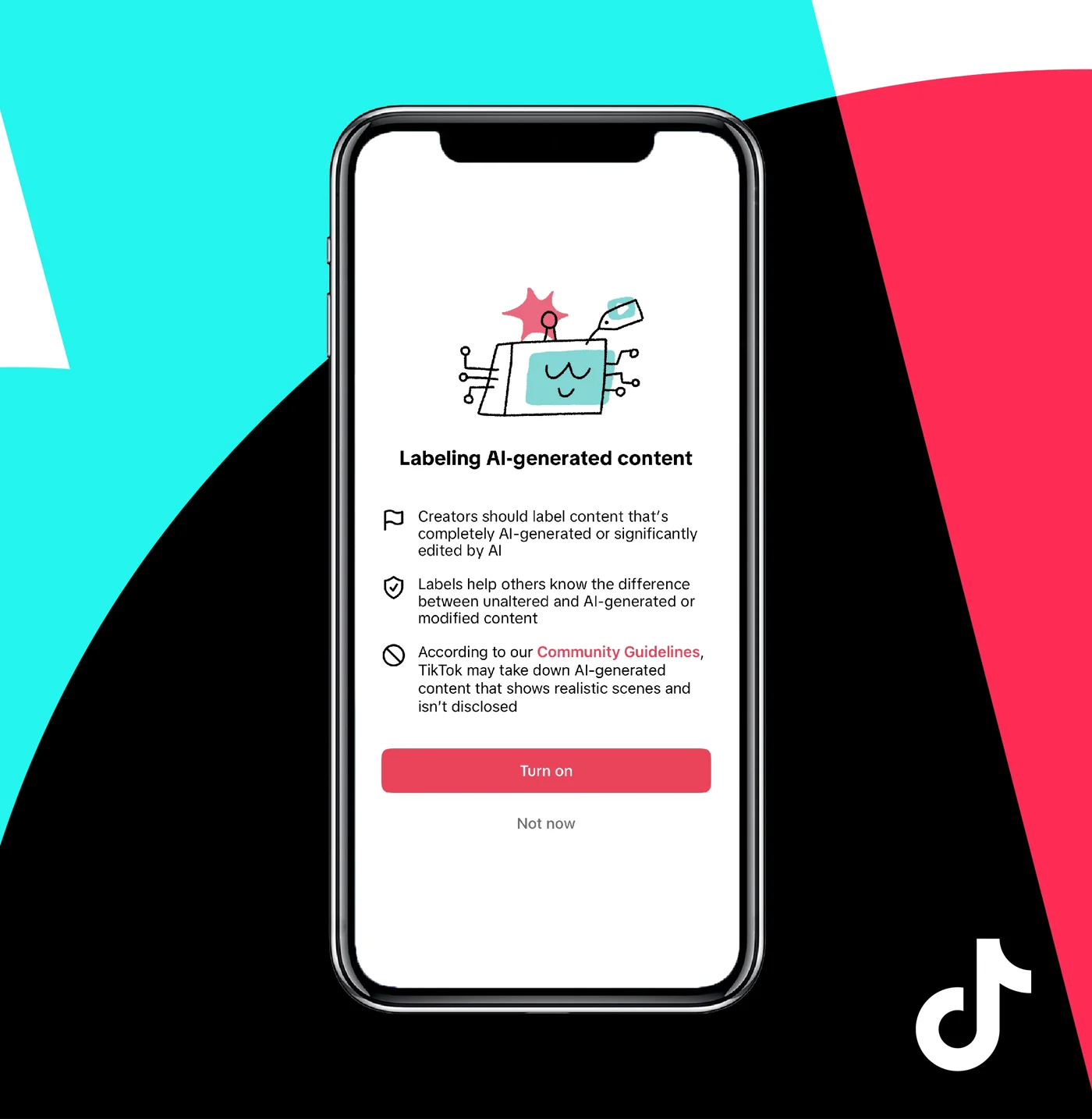
The AI label toggle screen. This is the 2023 interface; it may look different now. Source: TikTok
TikTok also applies its own "AI-generated" label to videos created with its AI effects and to uploads containing generation metadata (Content Credentials). This label cannot be removed. According to TikTok, the label does not affect views.
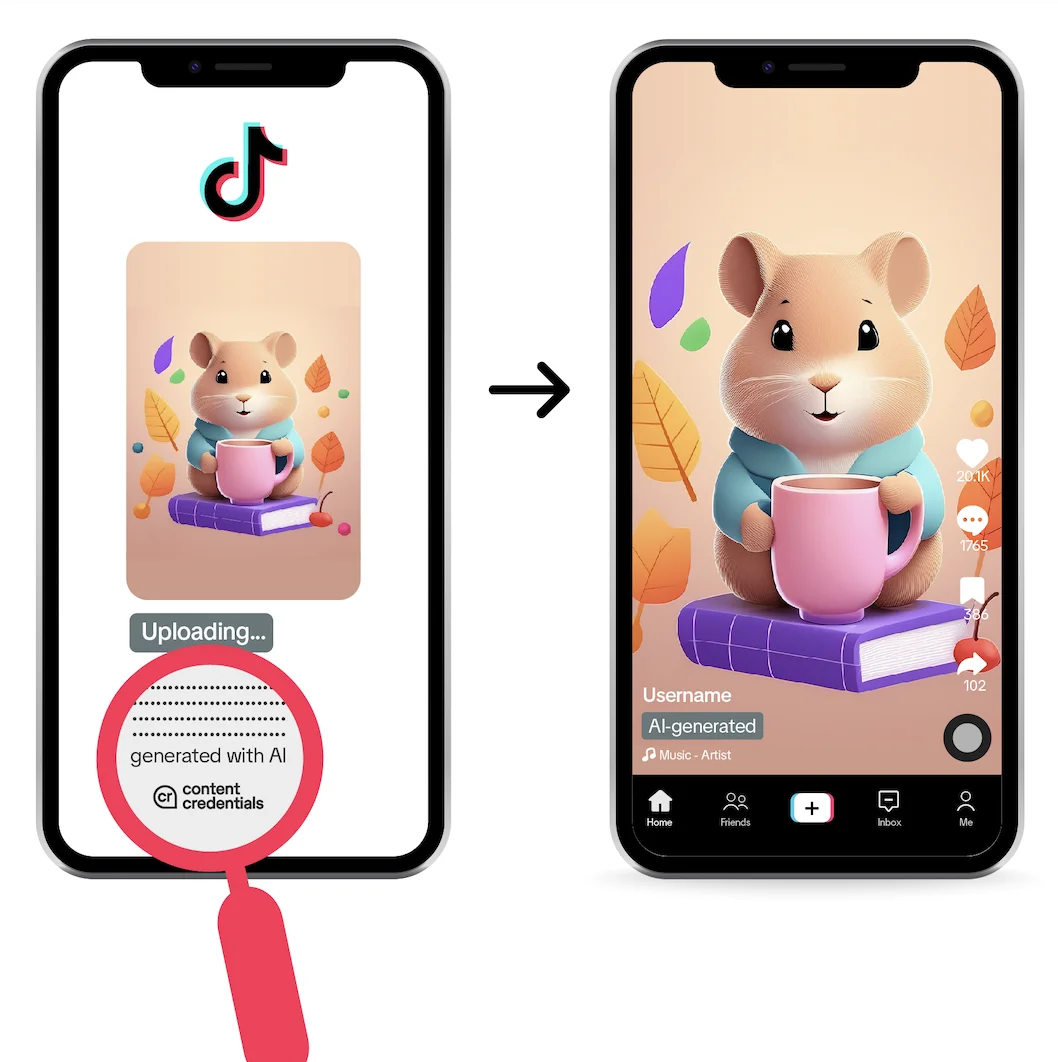
If a file contains generation data, TikTok applies the label automatically. This is the 2024 interface. Source: TikTok
For more on AI labels on different platforms, check out our article "Sora is Gated: What Are the Alternatives?".
Re-uploads and Unoriginal Content
No changes here either. Re-uploads without creative edits—for example, those with another creator's watermark or logo—and minimally edited videos are ineligible for the For You feed. There's no specific rule about clipping other people's content; the general principle applies—you need to add your own transformative value.
The rules are stricter for the Creator Rewards program, where TikTok pays for views: unoriginal videos, split-screens, low-effort reactions, slideshows, duets and stitches, videos under one minute, and ads are not eligible. Five video violations within 30 days will get you permanently disqualified from the program.
LIVE Streams
The sections on LIVE streams in the Community Guidelines have not changed. The claim that "as of September 24, asking for money on LIVE is forbidden" is a misinterpretation of the separate LIVE monetization policies, not the Community Guidelines. Under those policies, TikTok disables monetization, but does not issue a ban, for guilt-tripping viewers for Gifts, soliciting for personal fundraising, "voting" with gifts, passing off a recording as a live broadcast, and hosting a LIVE stream with an AI avatar without the creator present.
Off-Platform Behavior
The rule that TikTok can ban you for off-platform behavior was also in the previous version. It was simply moved to a different section. This applies to serious offenses: association with violent groups, sexual abuse, violent felonies, and human trafficking.
Diets, Fitness, and Psychology
The rule that TikTok avoids showing too many videos in a row about extreme fitness, diets, and general mental health advice isn't new either. Some publications presented this as a recent change.
How to Add AI and Ad Disclosure Labels
AI Label
- Tap the "+" button and record or upload your video.
- Tap the checkmark, then "Next."
- Open "More options" (three dots) and toggle on "AI-generated content."
For photos: tap "+" → post settings → "AI-generated content."
Ad Disclosure
- On the post screen, open "Content disclosure and ads"—if you don't see it, look under "More options."
- Toggle on "Disclose post content."
- Choose the type:
- "Your brand" if you're promoting your own business. The label will read "Promotional content."
- "Branded content" if you're advertising for another brand. The label will read "Paid partnership."
- Save and post.
For an already published video: tap the three dots → Ad settings. For a LIVE stream: tap "+" → LIVE → Settings → Content disclosure. You can't change the label type after posting; if you make a mistake, you'll have to delete and re-upload the video.
What This Means for Brand Briefs
Under TikTok's rules, videos made for brand briefs on Prime Oracles—banners, UGC, clips, music campaigns—are considered advertising for another brand in exchange for a reward. This means they require the "Branded content" disclosure. Previously, forgetting the label would get your video kicked off the For You feed. Now, TikTok might just reduce its reach or add the label for you—but either way, the views that the brand is paying for will suffer.
Learn how briefs work and what formats are available in our article "How to Make Money on TikTok, Shorts, and Reels in Russia". And if your videos suddenly stop getting views, check out our guide to the TikTok shadowban.
Checklist
Do:
- ☐ Add the ad disclosure label before posting—including for videos from brand briefs.
- ☐ Label realistic AI-generated content.
- ☐ Make truly transformative edits to others' clips and remove their watermarks.
- ☐ If your video isn't recommended, check the reason in analytics and file an appeal.
- ☐ Complete the training if TikTok offers it; it's a chance to regain access.
Don't:
- ☐ Engage in "like for like" schemes or promise rewards for gifts.
- ☐ Re-upload content without creative edits.
- ☐ Advertise high-risk financial services, injections, or cosmetic surgery without verified business status.
- ☐ Make videos where an AI deepfake of a celebrity "promotes" a product.
- ☐ Add the AI label to a regular video—that's also a violation.
- ☐ Create a second account while your first one is restricted.
FAQ
When did TikTok's new rules go into effect?
September 24, 2026. They were published on August 25, 2026.
Is it true that TikTok now bans AI videos?
No, the rules on AI have not changed. Realistic AI content must be labeled. Unlabeled content may be removed, restricted, or labeled by TikTok, but the label itself does not affect views.
Can you no longer ask for money on LIVE?
This point in the Community Guidelines has not changed. Guilt-tripping for gifts and soliciting for personal fundraising are prohibited by separate LIVE monetization policies, which result in monetization being disabled, not a ban.
What happens if I don't add an ad disclosure label?
Your video won't be automatically removed from recommendations, but TikTok may reduce its reach or add the label itself. Repeat violations can lead to a temporary posting suspension or a ban.
Why aren't my videos getting views after September 24?
Most likely, the reason lies in the old rules, not the new ones: a re-upload without edits, someone else's watermark, unlabeled AI, or an undisclosed ad. Check your account standing and the video's analytics.
Can I regain access after a restriction?
In some cases, TikTok offers optional training on its rules. Completing it may get the restrictions lifted. Strikes also expire after 90 days.
Sources
- TikTok Community Guidelines, "2026 August" version — effective 09/24/2026
- Previous versions of our Community Guidelines — TikTok
- AI-generated content — TikTok Help Center
- Disclosing content with commercial purpose — TikTok Help Center
- Content violations and bans — TikTok Help Center
- LIVE Monetization Policies — TikTok LIVE
- Creator Rewards Program — TikTok Creator Academy